Volume 145 - Cleaning Validation in Drug Manufacturing

Cleaning Validation in Pharma Manufacturing: Do you have any coupons?

The Importance of Keeping Equipment Clean

In previous issues, we covered the importance of cleaning surfaces to avoid microbial contamination. In this volume we will explore different types of cleaning that can occur and what it means to perform a cleaning validation.

Why do we clean?

It is important to clean our equipment, especially surfaces that directly touch product, to ensure they are free of contamination.

Cleaning ensures the product is free from contamination including:
Microbial Contamination

Microbial contamination can cause adverse health effects such as cancer, autoimmune diseases and in serious cases can cause death.

Cross Contamination

manufacture multiple products. Cleaning prevents any leftover residue from one product to carry over into another product. Cross contamination can affect product stability and performance.

Detergent Contamination

Cleaning in manufacturing is done with many different types of detergent. It is important to ensure all detergent is removed from equipment, so the residue does not affect the next product produced on that  equipment.

Different types of cleaning

There are a few different ways that equipment can be cleaned after manufacturing.

Clean-in-Place (CIP) icon process image

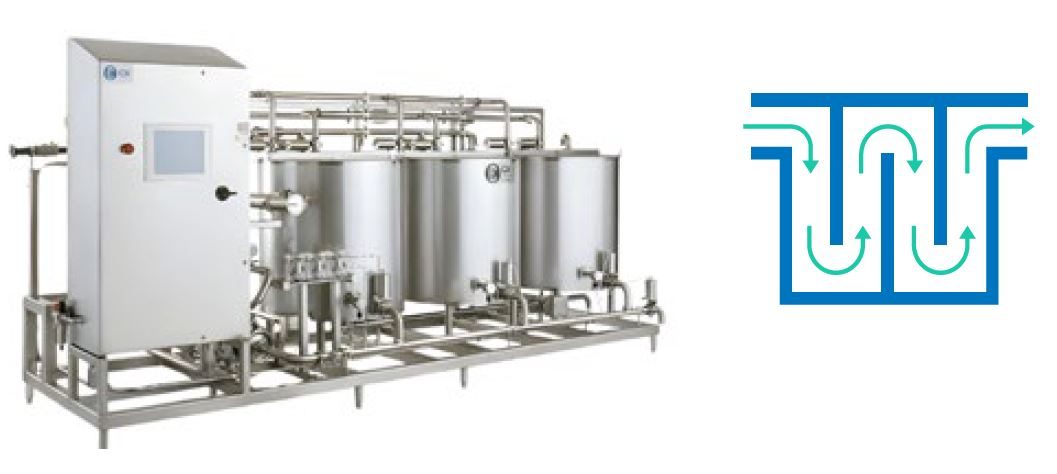
Clean-in-Place (CIP)

CIP is cleaning equipment without disassembling parts. The process is cleaned as a system by running heat, water and sanitizing chemicals through process equipment

clean out place cop section icon process

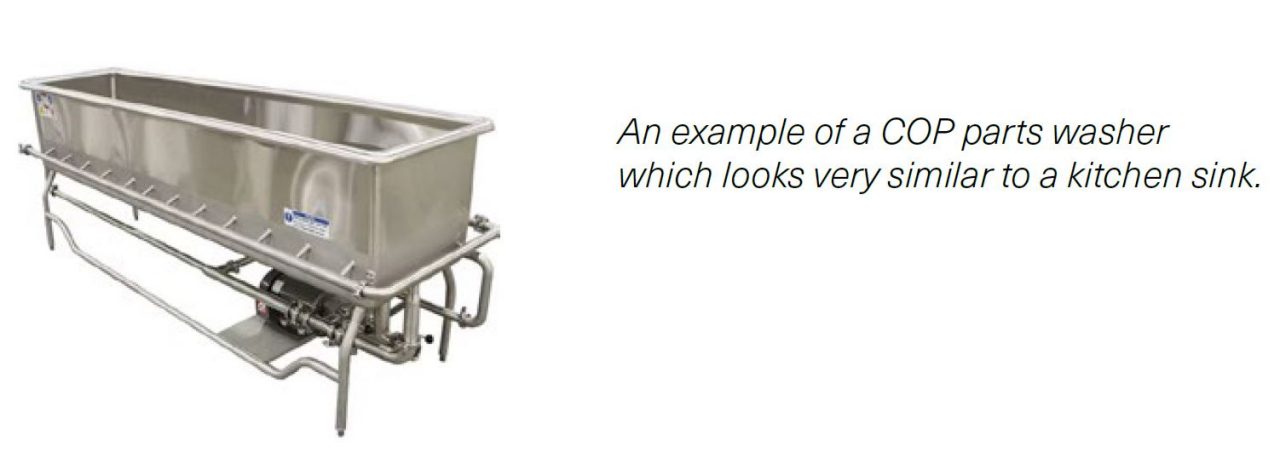
Clean-out-of-Place (COP)

COP is the cleaning of equipment with disassembling of parts. Cleaning equipment out of place is very similar to cleaning your dishes in your sink at your house!

Fact: Because contamination in the pharmaceutical industry can have so many adverse and even deadly consequences, you need to prove that your cleaning method works. Read on in the next page to see how we prove our cleaning works!

Cleaning Validation

A cleaning validation is proof that the cleaning process removes all potential sources of contamination. It tests that all residues of the product that was manufactured prior and any cleaning agents used in the process have all been removed. Cleaning validation is critical to maintaining patient safety and mitigating cross contamination.

Cleaning Procedures

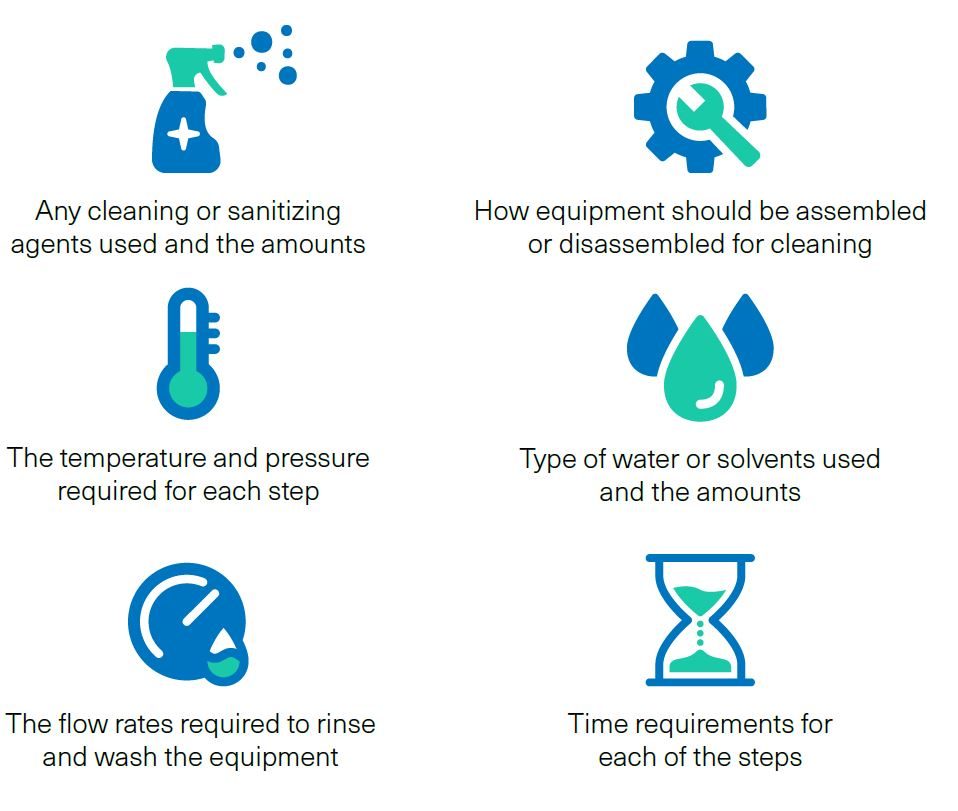
The first step in a cleaning validation is developing the instructions used for cleaning the equipment. These instructions should be equipment and product specific and include at a minimum:

cleaning procedures descriptions with icons

Cleaning Validation Components

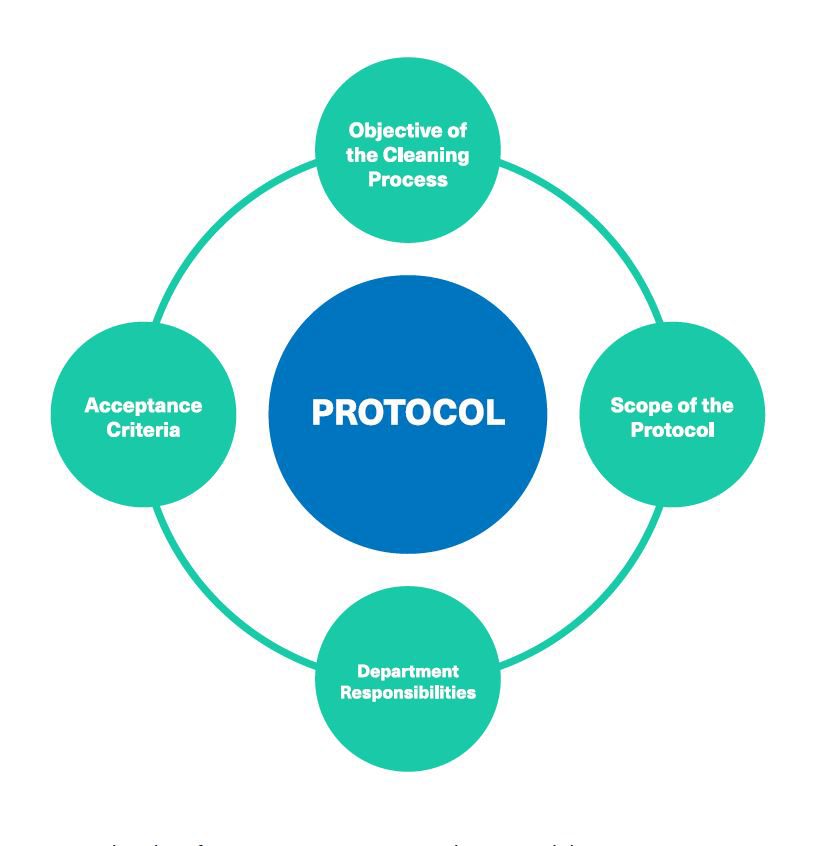
A validation is done on the cleaning process. Once a cleaning process is created, a protocol for cleaning validation can be created. A robust validation protocol includes what equipment or products are impacted, and what results are needed to pass the validation.

Acceptance Criteria

In order to prove that your cleaning process removes all residue, you need to test that your cleaning worked. Two common methods are equipment swabbing and visual inspection

Visual Inspection

After a cleaning process is run equipment will be visually inspected prior for any soap or product residue. Sometimes blacklights or other techniques are used to help see the residue better.

Equipment Swabbing

Equipment will be swabbed in product contact locations to test if all soap and product residues have been removed. Swab sites and test methods for detection should be determined prior to performing the cleaning validation and specified in the protocol.

cleaning validation components diagram

Coupons

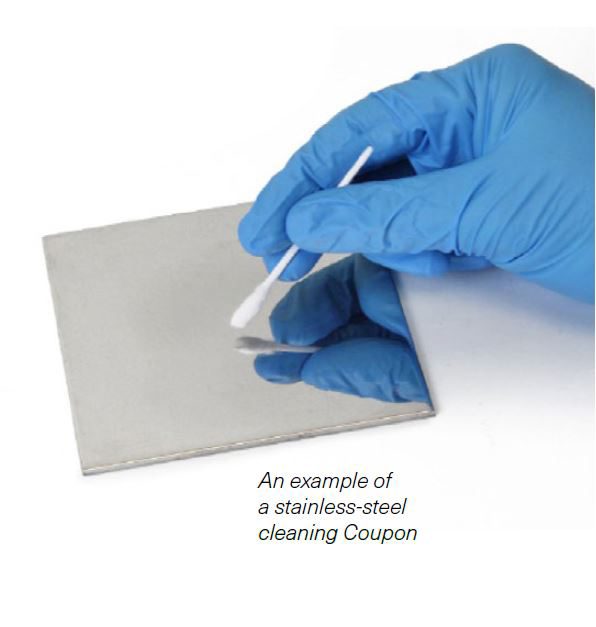
Before creating a cleaning procedure, you need to decide which detergent or sanitizing agent to use. In order to do this some companies will use Coupons. Coupons are disposable surfaces that mirror the properties of equipment surfaces that can be used to test removal of product residue with different detergents before the process is run on manufacturing equipment.

Fun Fact: Testing methods are needed to detect any product or detergent on the swabs taken from equipment. Coupons can also be used to develop these test methods.

an example of a stainless steel cleaning coupon

Vision.
Expertise.
Success.

Learn more about pharma manufacturing services in our Contract Manufacturing Services section.

There was a problem submitting the form. Please try again later.
required

The categories of personal information collected in this form include name, company, and contact information. The personal information collected will be used for exploratory discussions on contract manufacturing, marketing and to perform research and analytics. For more information about the categories of personal information collected by AbbVie and the purposes for which AbbVie uses personal information, visit https://privacy.abbvie.

Thank you for subscribing!

You’ve been added to our list and will hear from us soon.