When manufacturing pharmaceutical products, it is important to verify the cleanliness of equipment and facilities in order to maintain product quality. If the equipment/facility is not cleaned properly, microbial growth can occur. Microbial contamination of drugs can cause long-term adverse health effects such as cancer, autoimmune diseases, and in serious cases can cause death. Microbes can also interfere with the chemistry of some drugs, causing them to lose their effectiveness due to the breakdown of active ingredients. This breakdown can have an impact on the safety of the product.
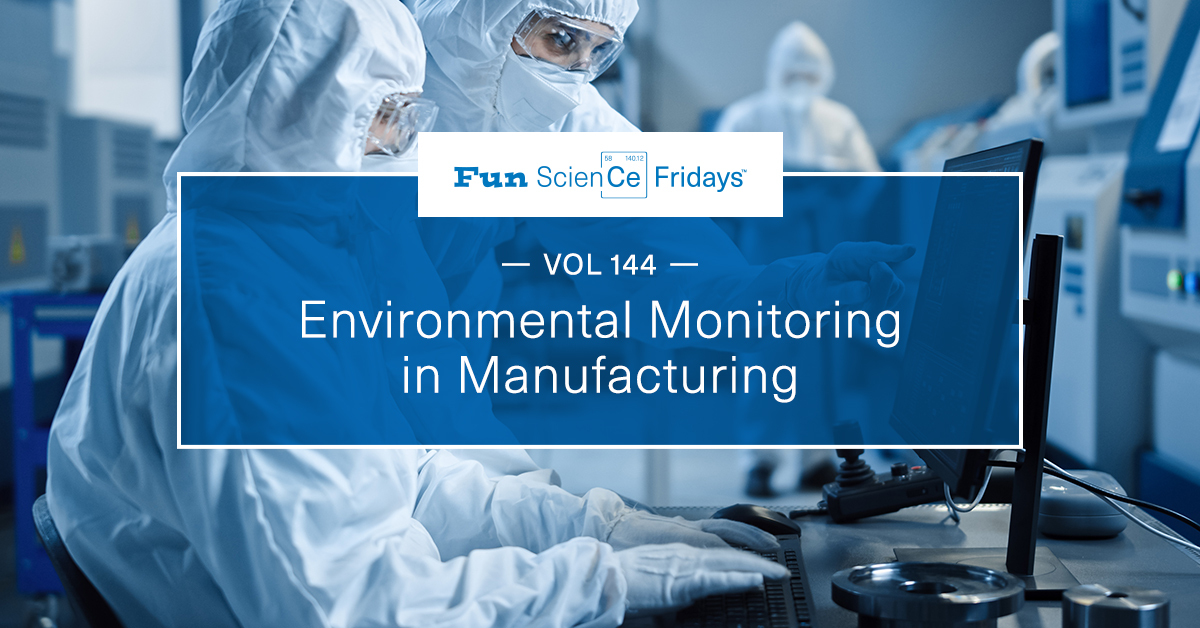
Cleaning House: Environmental Monitoring
Environmental Quality and How it Relates to Manufacturing
What Are Microbes?
Microbe is a term used to refer to microscopic organisms. Harmful microbes can invade our body, make us ill, and cause infectious diseases. Microbes are made of one or several cells and when they grow, they multiply in number of cells, not in cell size. As long as conditions are favorable, growth will happen in a continuous cycle. In order to grow, microbes require readily available nutrients and energy. Temperature also effects microbial growth, with most microbes growing slower in lower temperatures. (This is why we refrigerate our food!)
Microbes in Pharma
Depending on the form of the product, some drugs are more susceptible to microbial growth. Biologics are made from materials that are biologic in nature and support microbial growth during the process. Whereas drugs are usually chemical compounds, often in dry powder form, and do not support the growth of microbes during storage (even at room temperature).
Microbial Quality
Microbial Quality is the practice of ensuring facilities and products are free of unwanted microbes. There are many ways to ensure microbial quality, such as:

Aseptic Manufacturing Processes
Manufacturing process where the drug product, container, and closure a sterilized and combined in a cleanroom

Manufacturing Processes with Controlled Access
Using gloves and/or gowning to prevent microbial contamination from operators
Container Closure Integrity Testing
Evaluating the ability of containers to maintain a sterile barrier against potential contaminants
Positive Pressure
Maintaining airflow out of critical areas to adjacent areas

Environmental Monitoring
A system to measure and monitor microbial bioburden levels in a manufacturing facility

Surface/Equipment Swabbing
To routinely monitor surfaces for any microbial growth

Microbiological Testing at Various Stages of Manufacturing
A system to monitor microbial growth during manufacturing to maintain product quality
Media Fill Studies
Environmental and Personnel Monitoring
It is important to monitor your facility for microbes in order to maintain a level of control. Routine monitoring allows for a proactive detection method. Most facilities will use a combination of the Microbial Quality practices used above, however most use surface/air/water monitoring.
Air Monitoring – Microbes are everywhere, including in the air. Air monitoring counts the microbial particles on a continuous basis to make sure we are at a state of control. Air can be monitored in both a static and a dynamic method.
Surface Monitoring – Equipment and Surfaces are swabbed to be monitored for viable microbes to evaluate effectiveness of cleaning and disinfection. If microbial growth is detected a more robust cleaning method should be applied.
Personnel Monitoring – Microbes are all around us and they can get attached to our hair/clothes. In all manufacturing facilities gloves/gowns are used to mitigate microbial risk. In certain cases, gloves, gowns will be periodically sampled and monitored for aerobic bacteria (required for aseptic manufacturing).
Water Monitoring – Some pharmaceutical products utilize water in the product, but all require some water use for cleaning. Microbes can grow in this water, so most water sites are routinely tested for microbial contamination.
What happens if microbes are found?
Action Limit – An action limit is set at the regulatory limit for a room. This limit is set to be made aware if a facility is in control. If this limit is exceeded immediate investigation and corrective actions should be taken.
Alert Limit – The alert limit is set lower than the action limit. Since microbes are everywhere, this limit should be set at the typical level of microbes. If this limit is exceeded, it gives an alert that something may be out of the ordinary. An investigation should be conducted and if a trend is identified corrective action should be taken.