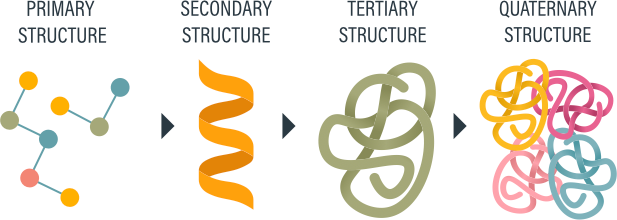
Proteins and peptides are both made up of amino acids, but they differ mainly in size and structure. Peptides tend to be smaller and less well-defined than proteins. Proteins are essentially long chains of peptides, also called polypeptides, that fold into a specific three-dimensional shapes (primary, secondary, tertiary and quaternary structures) to perform their function.
Proteins & Peptides – These Chains are Important
Proteins Versus Peptides
Proteins
Peptides
Size & Structure
Larger, more complex molecules—generally +50 (sometimes thousands) amino acids folded into intricate three-dimensional structures—that perform specific biological functions.
Short chains of amino acids—usually fewer than 50 amino acids long—that mimic or modulate natural biological signals.
Formation
Composed of one or more long peptide chains (polypeptides) folded and stabilized by hydrogen bonds, ionic bonds, and disulfide bridges.
Formed by linking amino acids through peptide bonds (amide bonds).
Function
Act as enzymes, receptors, signaling molecules, or structural components in the body. Like machines or antibodies—correcting, blocking, or replacing biological functions.
Often act as hormones, signaling molecules, or regulatory agents. They can bind to receptors and trigger targeted responses. Often short-acting and highly specific.
Stability
Highly stable, with defined structures that determine function.
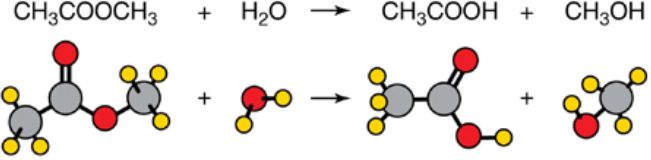
Usually less stable: more easily broken down by enzymes (even water) due to lack of size and structure.
Proteins & Peptides at AbbVie
Within the AbbVie portfolio there are a multitude of proteins and peptide-based products that are both commercialized and within the AbbVie pipeline. Yet, proteins and peptides constitute more than just the make-up of our products. Learn more below!
Proteins at AbbVie
Many diseases arise from protein malfunction, overexpression, or misfolding. Our science focuses on modulating protein function by:
- Targeting disease-driving proteins (e.g., TNF-α, IL-23, BCL-2)
- Engineering proteins as drugs (e.g., monoclonal antibodies, ADCs)

mAbs are engineered proteins that mimic the body’s immune defense. We design them to bind specific protein targets involved in disease.
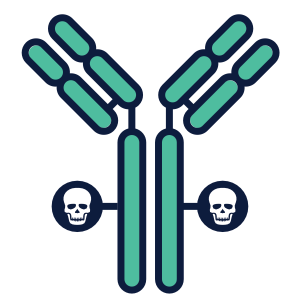
ADCs are complex proteins that combine a mAb (for targeting) with a cytotoxic small molecule (for killing the cancer cell).
Peptides
Peptides represent nature’s signaling molecules, acting as hormones, neurotransmitters, or receptor ligands. AbbVie’s peptide science leverages their specificity (like biologics) with manageable size and modifiability (like small molecules).
Peptide Engineering Expertise
AbbVie’s deep peptide knowledge began in the 80's with a synthetic analog design.
Drug Delivery Innovation
The formulation laid the groundwork for longacting peptide delivery systems in our pipeline.
Proof of Concept
It proved that peptides could achieve therapeutic outcomes only thought possible with small molecules.
AbbVie’s research into proteins and peptides represents a continuum of molecular complexity:
- Small molecules → chemical precision
- Peptides → biological mimicry with chemical tunability
- Proteins & antibodies → full biological precision with large structure complexity
Each step adds size, specificity, and intricacy, allowing AbbVie to target the entire spectrum of disease-relevant proteins to enable remarkable therapeutic effect.